
Written from the iDavos team’s accommodation and logistics specialists.
For one week each January, Davos becomes one of the most heavily secured towns in the world. The combination of heads of state, a confined alpine valley, and a single main road makes security and logistics the defining practical reality of the Annual Meeting — and the thing first-time attendees most often underestimate.
What the security looks like
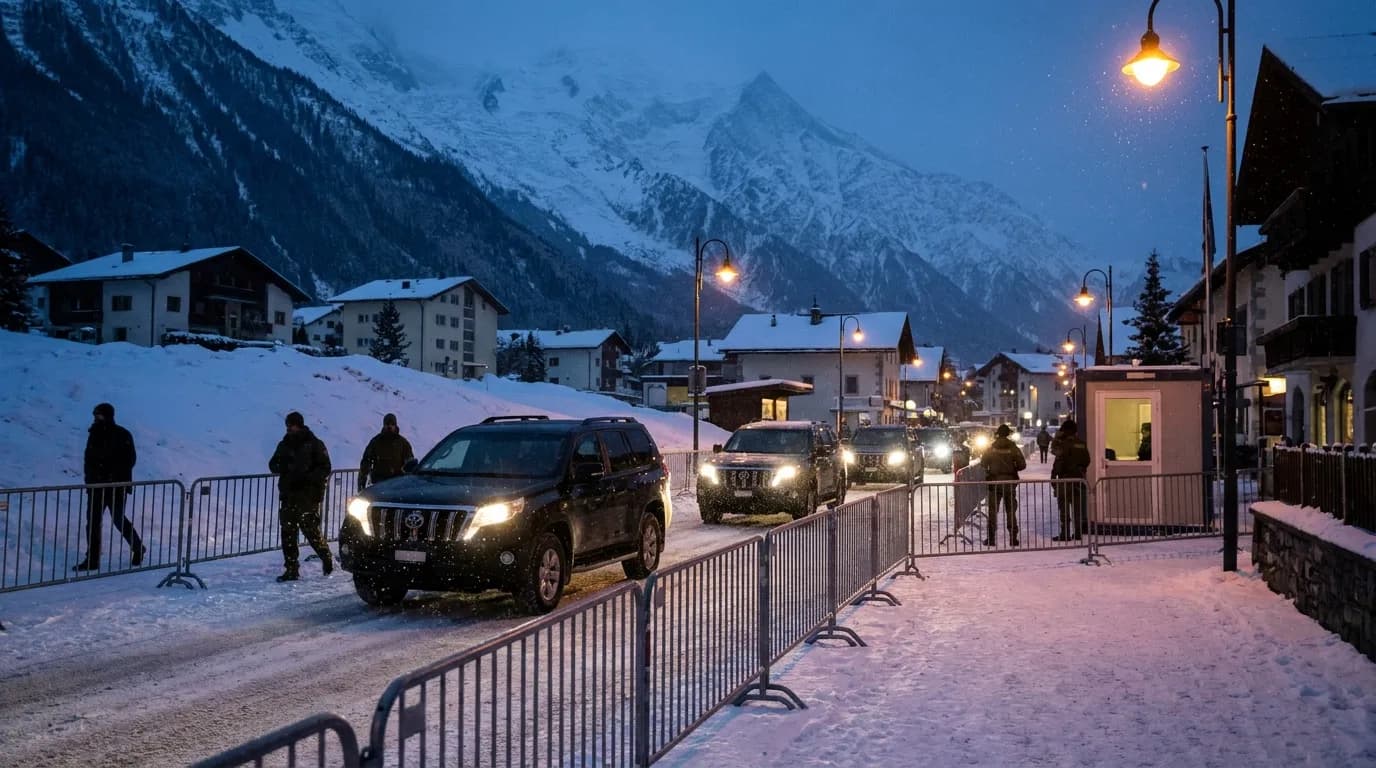
During the meeting, Davos operates under a large-scale security operation involving the Swiss authorities and the army. Expect controlled access zones around the Congress Centre and key venues, checkpoints, restricted parking, and a visible security presence throughout the town. The official programme is badge-controlled, and movement through certain areas is managed. None of this is obstructive if you plan for it — but it does mean the town does not behave the way it does the rest of the year.
What it means for getting around
Two practical consequences follow:
- Routes and timing change. Journeys that are quick in normal conditions can be slower or rerouted, and you need to build in buffer time for anything with a fixed start. Proximity matters more than usual — being able to walk to the Congress Centre removes a whole category of risk.
- Transport is in short supply. Cars, drivers, and parking are all stretched, and self-driving into controlled areas is impractical. Most delegates rely on pre-arranged private drivers who know the week's restrictions.
For the general picture of local transport, see getting around Davos; the difference in January is the security overlay on top of it.
How to plan around it
The principles are simple and they all point the same way:
- Stay close. The nearer your accommodation is to the Congress Centre and your meetings, the less the security zones affect you. This is the single biggest lever.
- Arrange transfers in advance. Drivers, timings, and routes should be set before you arrive, not improvised.
- Build in buffers. Treat every fixed commitment as needing more travel time than it would the rest of the year.
- Have someone managing it. The logistics reward a single point of coordination across accommodation, transfers, and schedule.
This is exactly what the iDavos VIP concierge team exists to handle — verified accommodation positioned for the week, drivers who understand the restrictions, and the coordination that keeps a tightly-scheduled week moving. Start with where you stay, since everything else follows from it, and get in touch to plan the logistics around it.